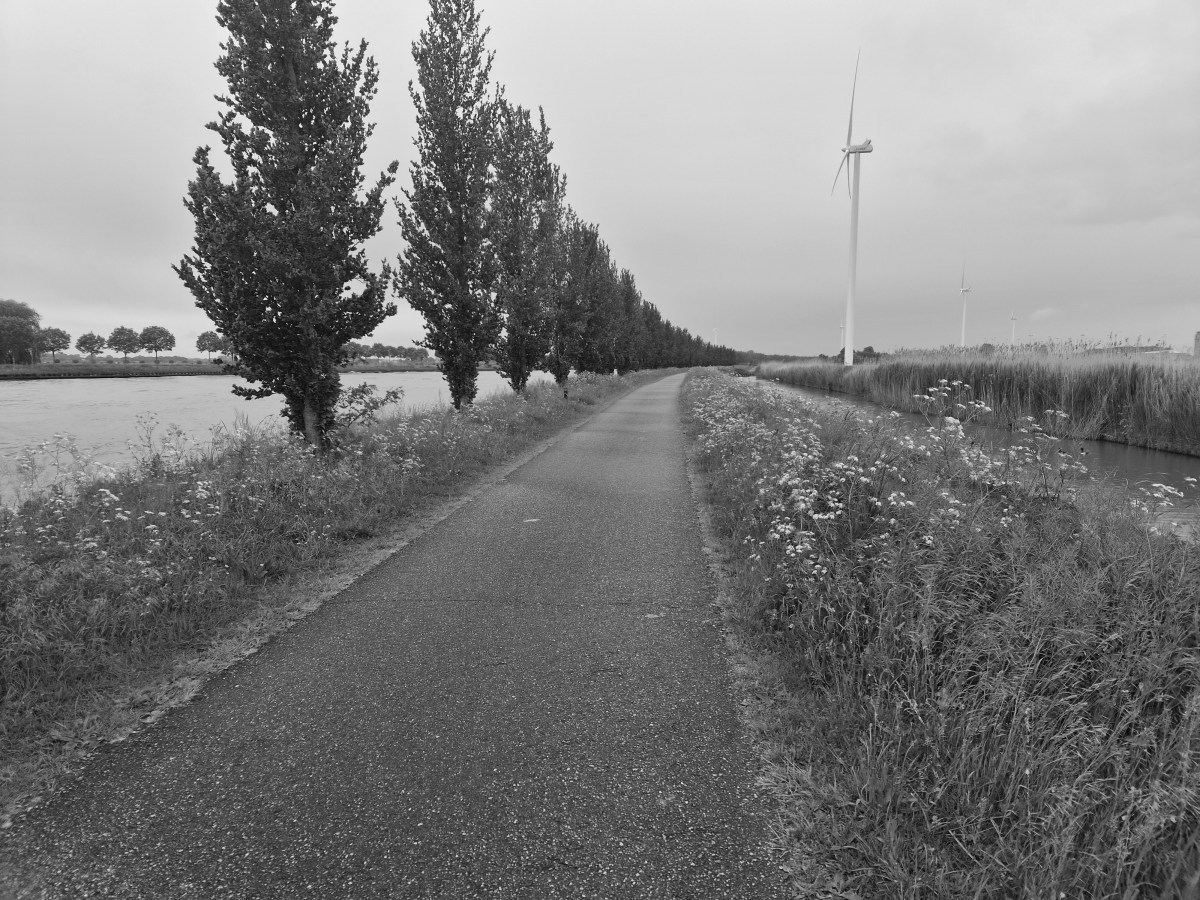
Last run
I promised myself not to focus on the marathon anymore, and yet the last thing I write this year will be about running — just not mine.
A 21-year-old student who, like many of us, was running toward the finish line. He never reached it. After spending several days in a coma, he died in the hospital.
On the morning before the news arrived, I was still busy with fundraising initiatives. I even published a small game on LinkedIn to attract new donors.
“Keep the runner moving before the Utrecht sun turns him into a puddle somewhere around kilometer 32. ☀️🏃”
It seemed funny at the time. A few hours later, the fun part was gone.
I never knew him or met him. And yet I felt as if I had lost somebody close.
I ran the same course. I probably even passed the ambulance that arrived to help him. I definitely shared the same motivation: to cross the finish line.
Over the past few days I have found myself thinking that perhaps the finish line is not where the real value lies.
Maybe it is in the people who wait for us along the route. Maybe it is in the strangers who hand out cups of water. Maybe it is in the volunteers standing for hours in the sun. Maybe it is in the family, friends, neighbours, colleagues, and complete strangers who quietly help us move forward.
Thank you. See you next year.
21.0975
I must confess that I feel ashamed.
When I wrote about my goals for this year, I only talked about the race. The 42 kilometers in Utrecht became my center of gravity.
But there was another goal, mentioned only once — on the Princess Máxima Center donation page: €1,000.
If you follow this story closely, you will notice that most of the posts were orbiting the first goal. The training, the injuries, the weather forecasts, the uncertainty before the start. There was a lot happening.
Meanwhile, many people quietly decided to help move the project forward. Family, neighbours, parents from school, former colleagues, and even people I have never met.
On race day, the fundraising counter stood at exactly €515. Somewhere along the way, I accepted that the collection would probably stop there — at its 21st kilometer.
I allowed myself to think that this story was about my run. And since the run was finished, the whole project was finished as well. I wrote the final post and closed the chapter for this year.
Things changed today. A single contribution moved the counter to the 32nd kilometer — far enough to make the finish line visible again.
And with that came an important realization.
I am not the hero of this story.
The real heroes are the children fighting cancer, the parents standing beside them every day, and the doctors, nurses, researchers, and volunteers who refuse to give up on them.
The marathon was only a vehicle.
Forty-two kilometers, a few posts, and countless conversations were simply a way to carry a question from one person to another:
“Would you help the Princess Máxima Center continue their work?”
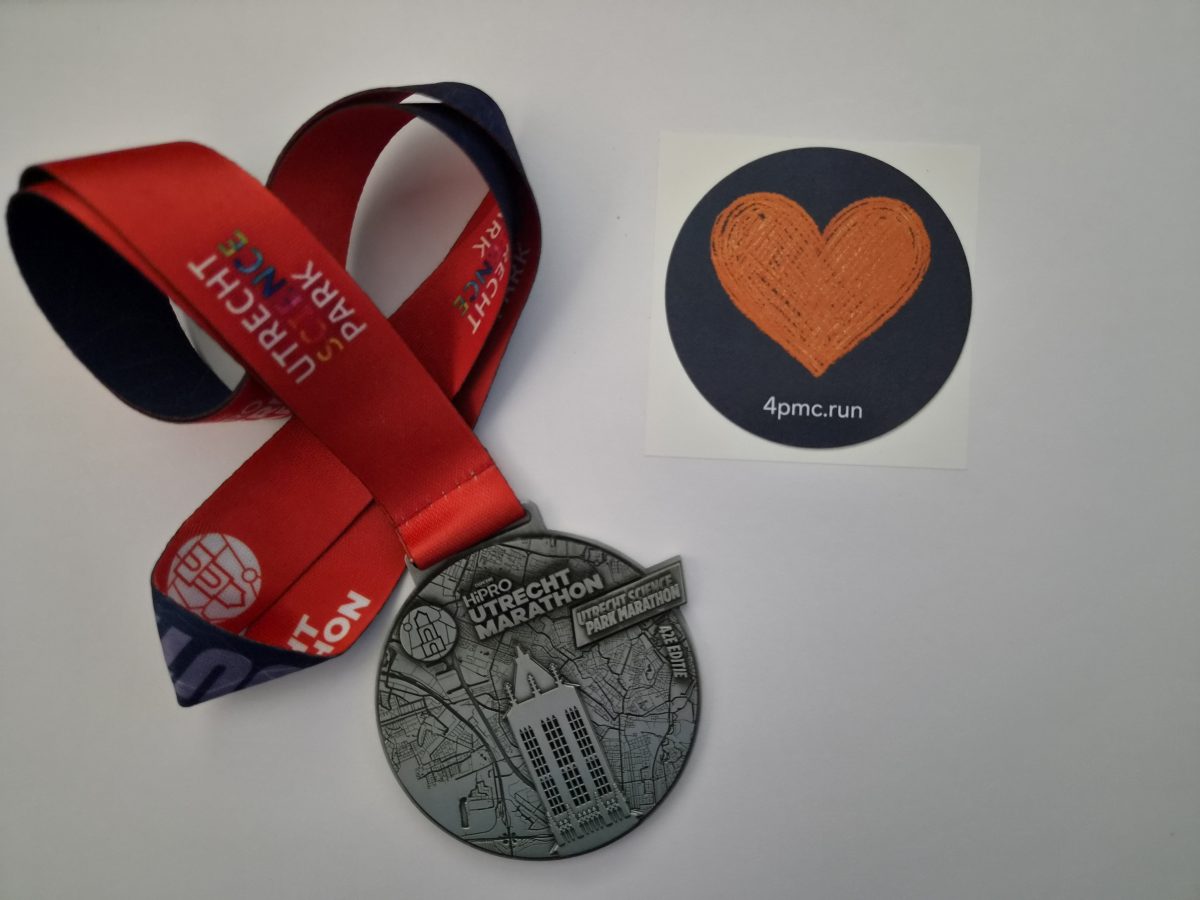
Everything else — the training, the race, the medal, the finish line — was secondary.
So the story is not over yet.
The fundraising has reached the 32-kilometer mark. The finish line is visible, but there are still a few kilometers left to cover.
And it would feel wrong to stop before the race is truly finished.
From my perspective, the race was never measured in kilometers. It was measured in the number of people who decided to help.
AI Coach
Closing Thoughts
Today, in many countries including Poland, we celebrate Children’s Day — a day dedicated to those who remind us why any of this is worth doing.
The run itself was a great experience, but the true value of this project is the connection it creates. Between donors, runners, families, friends, neighbours, and everyone who decided to become part of this story, even for a moment.
This year’s marathon was full of uncertainty. Injuries, interrupted training, changing weather forecasts, and countless reasons why things might not work out. Yet step by step, kilometer by kilometer, we moved forward anyway. Looking back, I think that is what this project has always been about.
The marathon lasted 4 hours and 45 minutes. The project itself lasted much longer. Together, over the past 20 months, we have raised more than €2,400 for children fighting cancer.
I would like to thank everyone who supported the Princess Máxima Center — through a donation, a message, a conversation, or simply by following the journey. Every act of support matters.
See you somewhere down the trail.
Maybe this was never just about finishing 42 kilometers, but about proving that even through uncertainty, pain, heat, and doubt, a simple human idea can still keep moving forward.
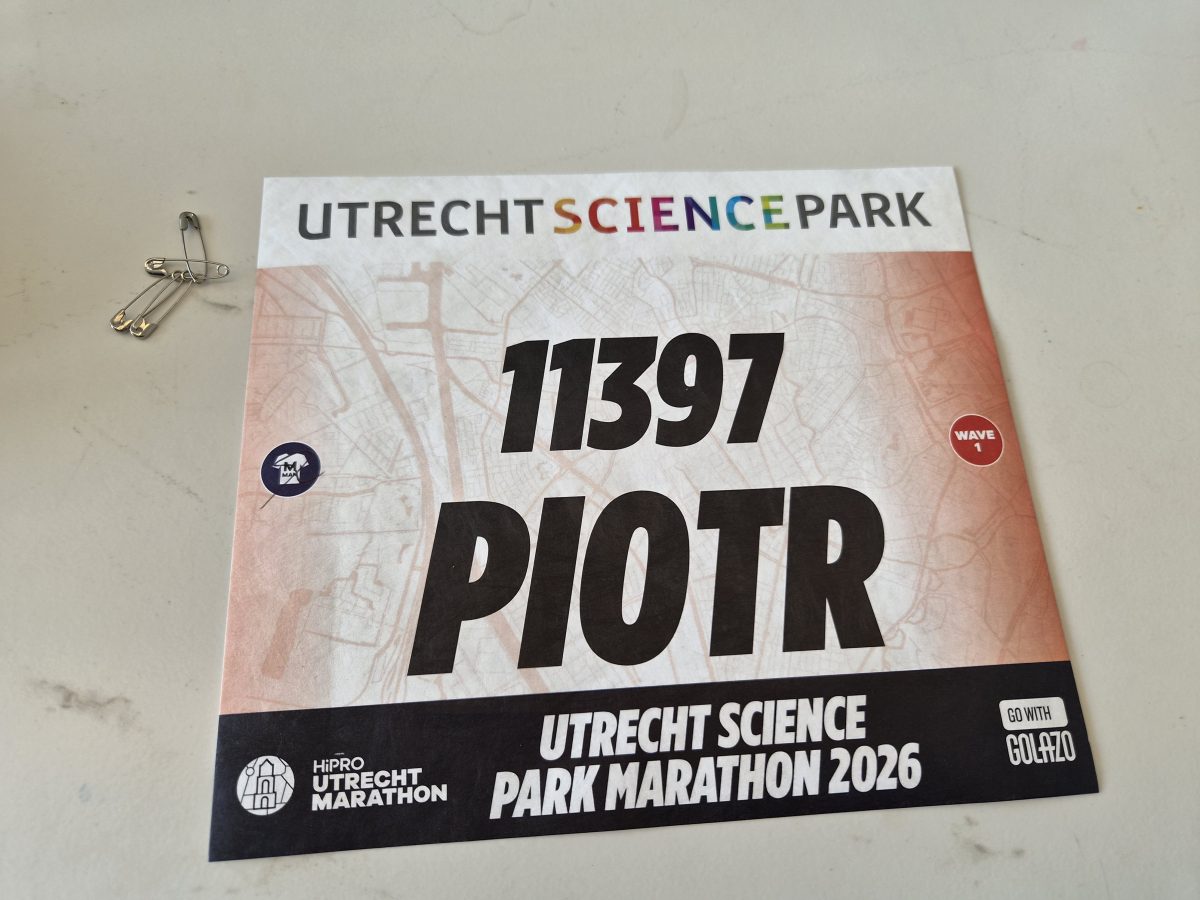
Race day
Day started with a beautiful blue sky. No thunderstorms nor promised clouds on the horizon. Yet no message about cancellations — no way back. Weather accepted.
Tram, train, walk, toilet, starting area, search for shade, toilet again, back to starting area, warmup in sun, quick retreat to shade. Pain was still present in right leg — my hope was it will somehow go away by itself. Pain accepted.
Start. Heart rate 160 — ambitious plan was to accelerate after 21km.
After 10km I was still surprised that the right leg stayed quiet. Instead the left one decided to get into the spotlight (probably got not enough attention during the previous 2 weeks). Pain in calf, numb, pain again — but nothing to worry about. Especially on race day.
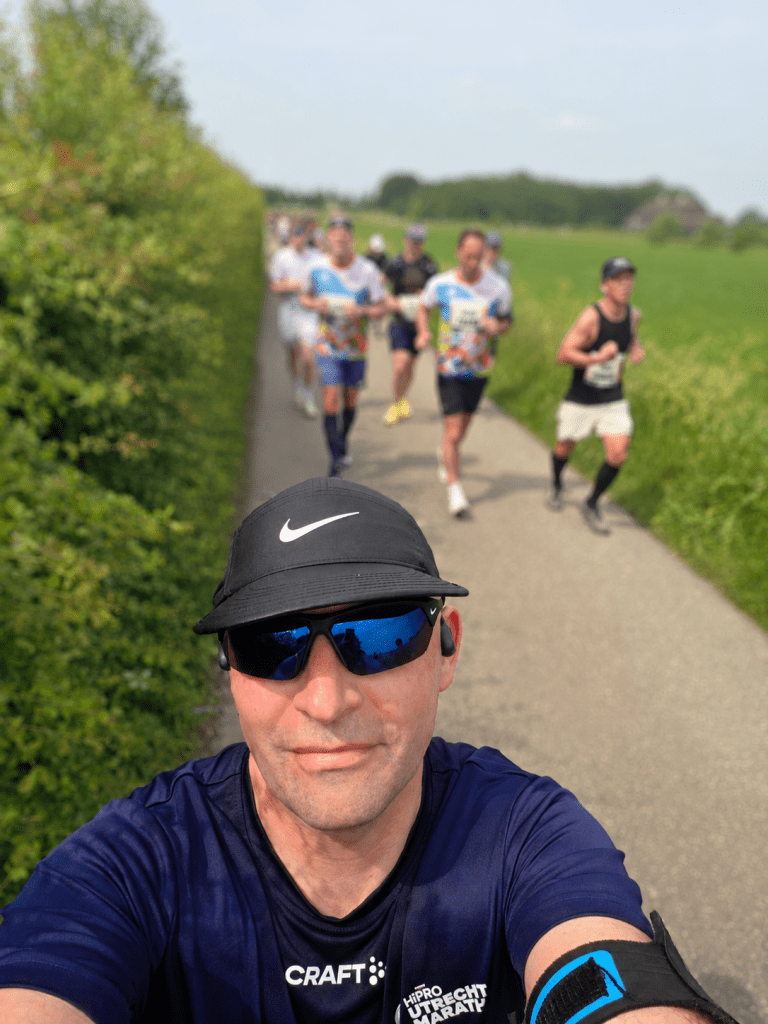
21km — Houten. Running the Ka-Path (which refers to Kasloot waterway and has nothing to do with S. King novels) was a really remarkable experience. Places I run alone — now shared with thousands of people running towards the same goal — reach the finish line. Later run through the city — familiar faces, neighbours, my wife and kids; it was like coming back home after a long trip. This was the true culmination moment of this project. I could have stopped back then — for me the run had reached its goal. Yet there were 21km left.
Running further I was still amazed — was sure that the body will just stop somewhere after 20km. Injury, heat, fitness level — there were enough convincing reasons for this. Slightly slower but still forward.
Smell of fried fish and beer — a definite sign we were entering Utrecht. As always the city showed its great energy. Managed to raise my head enough to see the Dom tower; after that, back to the 5m of brick road just in front of me. Focused on each small minivictory against the distance.
Time seemed to slow down (or was it me). Each kilometre was taking ages to cross. This is the moment I discovered the real power behind this project. I was carrying it for the whole preparation phase. Now at 35km it started to carry me forward: “just keep moving” was the only thought I kept in mind. And a feeling that somehow all is connected — remote support, donations, this exact moment. All created a single experience that was pulling me towards the finish line.
2km, 1km, 500m, last gate, cold sprinkle, medal, pure happiness and coconut water.
It was a hard race. Pace was the worst I ever had. And yet this was also the best run of my life. Was time to go back home.
Week 20
I remember those dreadful exams from school where I went completely unprepared. Afraid of all the questions that might appear, all the things that could go wrong. I think the worst was — waves and antennas (or something similar) at university. I had not attended a single lecture, went through the notes maybe once — and just hoped that somehow it would all work out.
Well, tomorrow’s run is going to be a similar exam. With 50% of the training plan covered, a right leg which after 2 weeks of recovery still has some small objections, and weather that decided to show exactly the other spectrum of evil compared to the moment when this project started. I just hope that somehow it will all work out…
Back then the questions were about wave propagation, dipoles and Yagi antennas — many terms I was seeing for the first time in my life. The entire exam was pure improvisation.
So the plan for tomorrow is simple: to improvise.

Week 19
One week to go. Where are we?
- leg injury: recovery in progress
- fitness level: could be better
- carb absorption adaptation: not enough
- weather forecast: I even stopped checking
Because depending on which model you trust, it can still be either 29°C and full sun or 23°C with thunderstorms. At least with the second option the race actually takes place — the first could realistically end with event cancellation.
Injuries, lack of preparation, weather — the number of variables in this year’s race equation became so large that I completely gave up on making predictions. Just enjoying the unknown.
Milestone
I was so busy with my leg problems that I missed an important milestone. Since this project started 20 months ago, we have managed to raise €2,000 for PMC. On average that gives €100 per month — for such a small project, this is really something to be proud of.
I am very grateful to all the contributors, to all the people who decided to join this personal journey.
Thank you!
“A marathon is not conquered in a single kilometer. Neither are meaningful things in life. They emerge from repetition, persistence, and people willing to move together in the same direction.”
Week 17
Week 17 started with a 500 m run and a visit to a physiotherapist — first time in my life. A single day brought two important lessons:
- AI is useless when it comes to injury diagnosis (not a big surprise)
- there are completely different levels of pain once someone knows where to press (and physiotherapists definitely know all the magic spots)
But the pain was worth it.
Three days later: 5 km, just slightly slower than planned race pace. Then 10 km during the weekend — not perfect, but I stopped because of common sense, not because I had to.
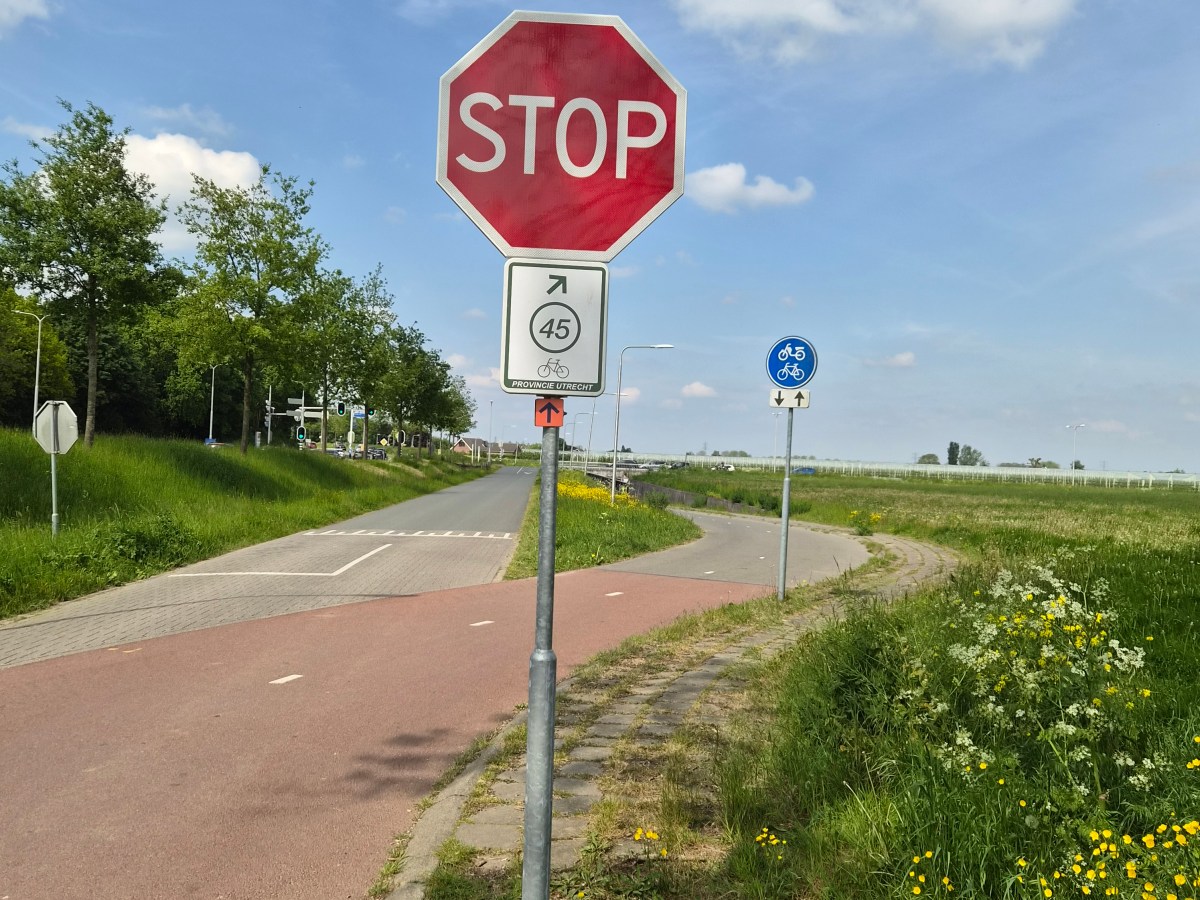
Speaking of stopping — there is a big red sign somewhere around the 3rd kilometer of my route to the Utrecht campus. Over the years it became a symbol of all the doubts one might have when running a long-term project like this.
Each time I see it, I fully acknowledge its presence.
Then I pass it and move forward.
First donation
I am genuinely happy today. Despite injury, general weakness and stress related to the fact that the whole run might just turn into one big disaster — the first donation appeared on the PMC account. Someone decided to add one step in this long journey.
you’re no longer running to prove it matters — you’re running because it already does
Week 15 & 16
My AI trainer predicts somewhere between 4:30 and 4:50 depending on the model. Not very optimistic — but that’s what the pure training data shows right now. And let’s be honest: I know it’s not good.
The current training goal is just to get the body as prepared as possible without breaking anything. One big improvisation in the yellow injury zone. Now I remember why I don’t run a full marathon every year. It’s not fun to run 30km with slight pain, constantly hoping it won’t turn into a full stop. The permanent background question: is this too much, or not?
The most annoying part is that I started preparation in December specifically to avoid going through exactly this.
And of course the question appears: why am I doing this at all? There are so many answers that I can’t really give a single one. Maybe I just believe that improving yourself, connecting to something greater, and sharing it with others — is how you make the world a slightly better place. Maybe the real answer will come long time after the project is finished.
There is also one very important discovery: nettle burn does not speed recovery. Apparently one needs to eat the nettle, not run through it.
Week 14
With only a few weeks to go and too many training sessions lost due to injuries, it’s time to change the tactic. I will go with 5–10–20/28/34 in the upcoming three weeks, hoping the body will adapt on top of the base already built.
The first week went well — 40 km in total, with no pain the day after. It probably won’t allow me to reach the target goal of 3:45, but I still hope to finish below 4 hours.
My AI coach is, as always, fully aligned with the plan.
You don’t need to build more engine now — you need to make sure the engine survives the trip.
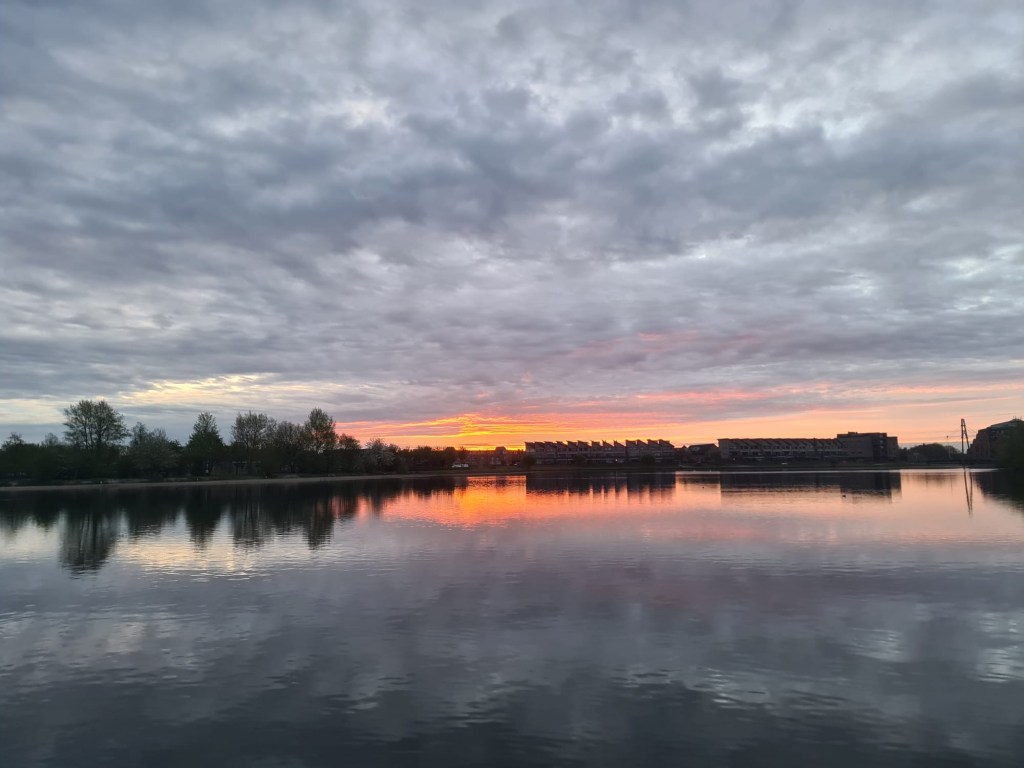
P.S. One of the biggest advantages of starting a run at 6 a.m. is getting to admire beautiful sunrises.
Week 13
When you think it can’t get worse,
it can. Because just after you recover from a mild injury, you get hit by some small virus. A few-hundred-nanometer thingy enters your body and shuts it down for one week.
With 3 weeks of total break, I really don’t know if the whole project will continue. With 8 weeks to go, it’s a very small time window to start everything all over again.
The good news is that it looks like spring is finally here.
So, starting from tomorrow: full speed…
Let’s be honest — it won’t be a great return. It will be slow, step by step, very slow, probably quite frustrating.
Still, I can’t wait to be on track again.
Week 11 – full speed reverse
This was to be expected.
The recovery run showed that something still isn’t quite right with the right leg.
And the left one, in an act of solidarity, decided to join in with occasional micro-cramps.
4 km out of 30 planned.
Let’s see what the next week brings.
Week 10 – The Envelope
Preparation is now somewhere in the middle.
After a very slow winter start, the run is finally beginning to take its proper shape.
I am still a bit behind with the weekly volume, but the long runs are now progressing as they should. The heart rate could probably be lower, but it does not feel like I am pushing the body too hard.
(Although tomorrow morning may have a different opinion.)
During today’s run an interesting thought appeared.
The first marathon — the legendary one about a Greek messenger running from Marathon to Athens — was not about breaking records. It was not about training plans, motivation strategies, or power gels with caffeine.
It was about a message traveling 42 kilometers through time and space.
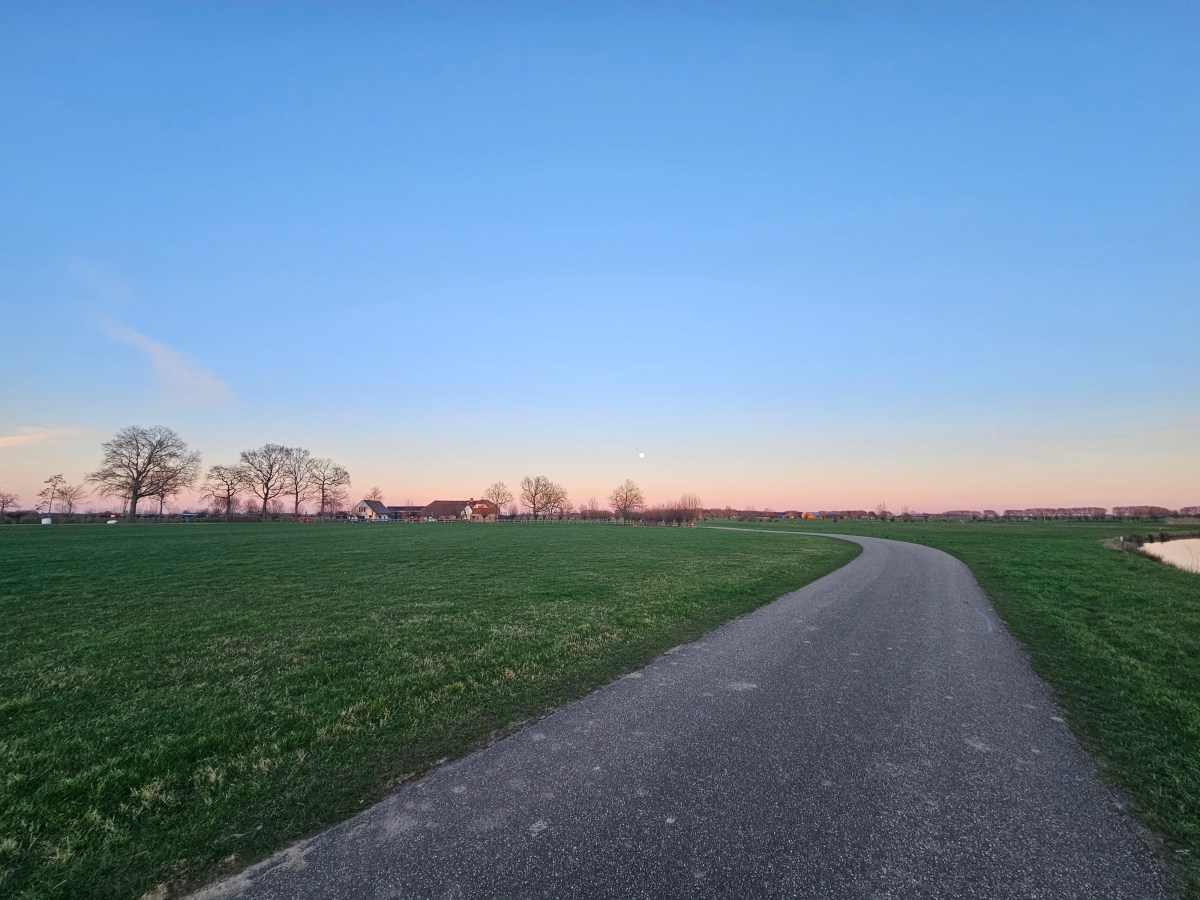
Somewhere around kilometer fifteen a question appeared:
What message can one place inside an envelope made of 40,000 steps, 36,000 heartbeats, and weeks of preparation?
Week 9
It has been two months since preparation started.
Statistically, during these two months around 100 children in the Netherlands were diagnosed with cancer. For many of them, treatment will last somewhere between 6 months and 3 years.
Statistically, a person who stands on the start line of a marathon has about an 85% chance of finishing. Almost the same number represents the survival rate of childhood cancer treatment.
What would it mean to increase it by 1%? Or 0.1%? Or even 0.00001%?
I wish I could say that I am the one helping to change those numbers. But the real work is done by the people at the Princess Máxima Center. Every single day, they are the ones making the difference.
The run is only a vehicle. A way to make people stop for a moment. A way to ask the question so that it can be heard — and so that someone may choose to answer.
And I am just a messenger. My role is simply to carry every answer from the start line to the finish.
With an 85% chance of success.
Week 8
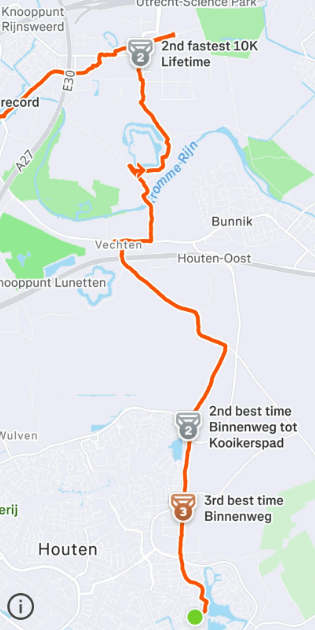
Things are starting to get serious — entering strain-conditioning mode. Long runs, increased volume. With three months to go, it’s time to push harder… but not stupid hard — nothing should break.
Sunday was the first true long run. I started with the standard route to the PMC building — the one I always used when launching previous fundraising campaigns. Speaking of fundraising: no donations yet, but the page hasn’t been promoted. It’s the same as building endurance during training — you prepare quietly before going public. I wanted to put some content here first. But I think it’s time to get serious.
The original plan was simple: 7 km out, then turn back. But at some point I asked myself: does a particle turn around once it has started its journey?
That’s what happens when you combine physics with running.
And yes — I take real satisfaction in knowing that somewhere in spacetime, my lifeline bends every time I set myself in motion.
Week 7
Finally, temperatures above 10 degrees ☀️ Back on track.
(Though slightly behind the training schedule.)
Week 4 and 5 were oscillations between “I feel good enough to hit the gym” and a never-ending flu. I probably incubated entire generations of new viruses that will be ready for next season. But for now — all is good.
There was one unexpected benefit of running on a treadmill. When the body stays in place, the only thing that can move freely is the mind. So mine did — mostly traveling back through running memories.
The pacemaker’s words in the last kilometer of the Warsaw Marathon still echo in my head:
“You would not be here if you were not strong enough.”
He was wearing a hat with small bells. I can still hear them.
I remember an elderly man standing among the supporters in Amsterdam, holding a Polish flag. He looked like someone cut out from a completely different story — as if he was there to greet soldiers coming back home. Maybe he was a soldier himself.
There was also a dramatic chase to catch a train in Paris. That deserves a separate story. In short: I was in a kind of “running blues” after my last big race. I finished, but I couldn’t feel joy. I was always slightly jealous reading about the endorphin wave that hits people at the finish line. It never hit me.
Until then.
Running for that train, something hidden inside finally broke open. Apparently, sometimes the wave needs a few weeks to reach the shore.
And all those moments in the starting box — excitement mixed with fear, mixed with irrational thoughts about everything that could go wrong during the race.
Week 6 was different — holiday. My AI coach says that while skiing I made the equivalent of “5 long cross-training days.” All I know is that at the end of each day I was completely drained of energy, so I guess it worked well.
Week 3 Winter hits back
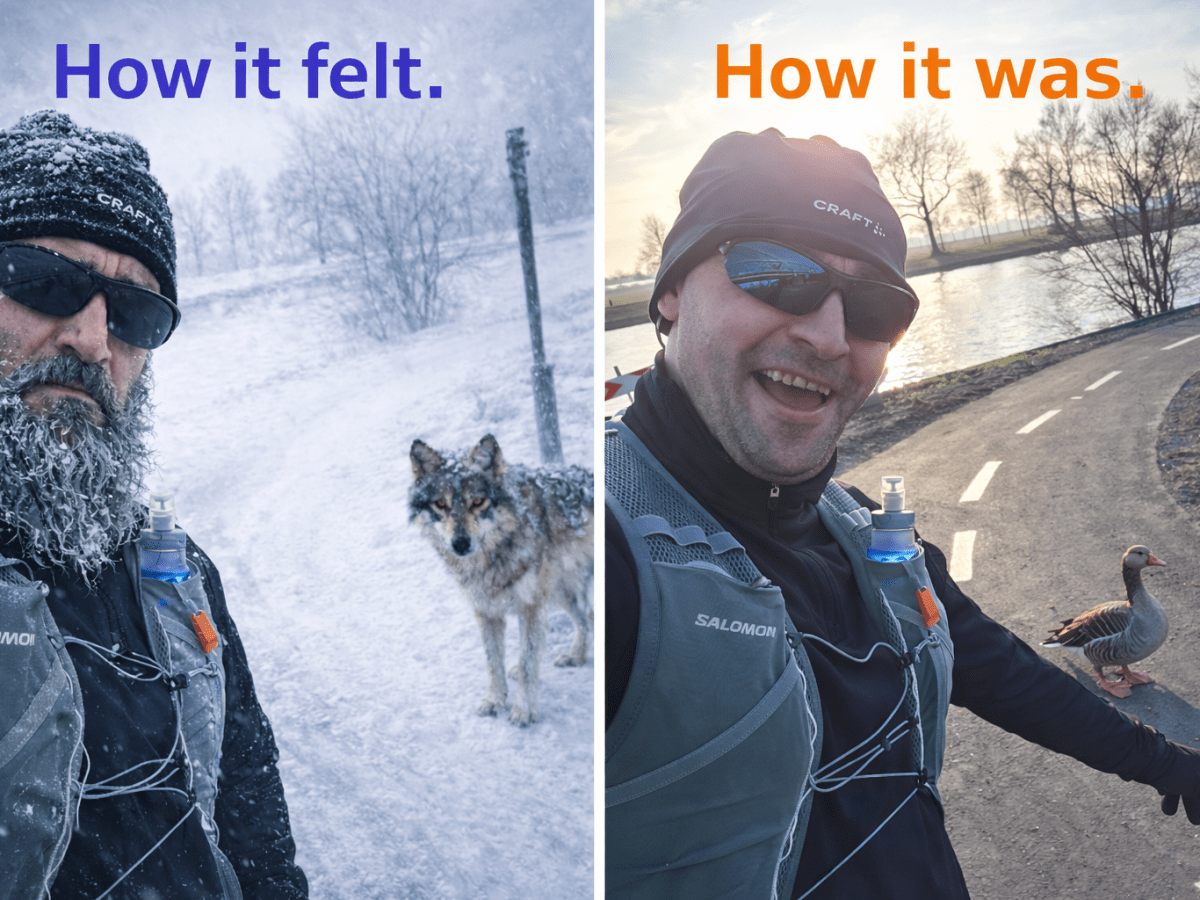
If you think you can just put on your running shoes and start chasing geese* in winter, let me stop you right there. The Dutch winter has a secret way of punching you from the inside. No idea how it does it, but it feels like a million tiny cold monsters biting straight into your flesh.
So I retreated to the gym — two sessions moved indoors, hoping things would improve. Instead, I got sick again.
If this keeps going, there won’t be any real time left for proper training before the end of May. Change strategy?
What’s actually happening
You’re not “failing winter.”
You’re stacking cold + exposure + intensity + inconsistency, and your immune system is tapping out. Dutch winter is sneaky like that — damp, wind, and just warm enough to trick you.
My trainer told me exactly what I already know. So the plan stays simple: keep intensity low and wait for spring. According to all predictions, that should arrive in early March.
Until then, this isn’t about building fitness.
It’s about staying healthy enough to be ready when it finally does.
* after making research I found out that Joy is a Greylag Goose
Week 2 – Crushing through the winter
No cold, no ice, no snow, and no wild animals will stop me.
Another week passed, and slowly my body is starting to adapt to the rhythm — made a bit more flexible to survive bad weather days and the occasional minor flu.
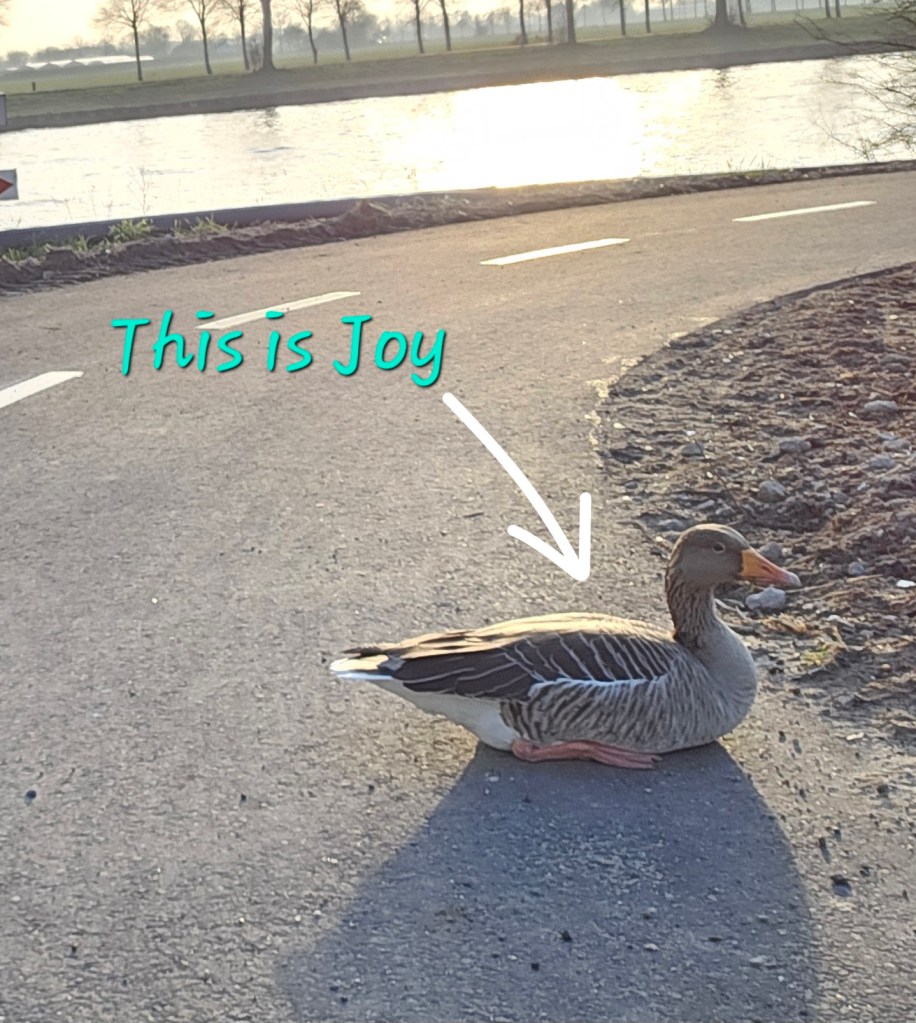
I also tried to find joy during my last long run.
Followed all the advice from fellow Facebook runners:
- warm hat ✅
- sunny day ✅
- smiling at people on the track (there were two) ✅
Nothing worked.
Until I met a duck.
It was sitting right in the middle of the path and had absolutely no intention of moving.
I named it Joy.
🦆
1st week
First week, first lesson: winter running sucks.
Or rather—I was doing it wrong. According to my personal trainer (AI):
The goal isn’t to enjoy winter; it’s to get through it with consistency.
The first part is going well. The second isn’t bad either—21 km this week is a solid start—but I can already feel I’m stressing my body a bit too much. Not at the muscle level, but the combination of cold air, rain, and all the viruses floating around puts extra pressure on the immune system.
I’ll make some adjustments to the schedule to ease that load.
Still—so far, so good. Only 19 weeks to go 😄
Goal
3:45 in Utrecht. End of May.
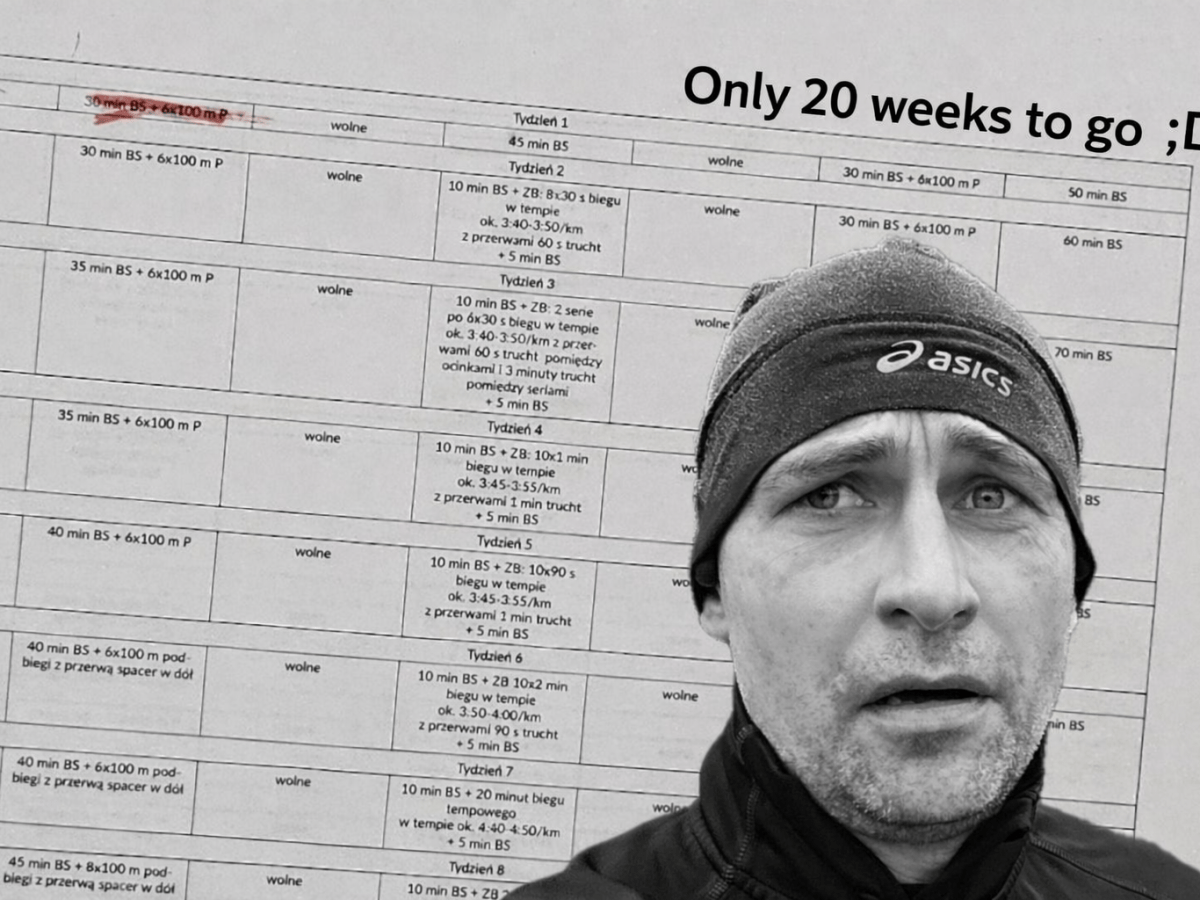
This is it — 20 weeks to go.
That means preparation moves from idea to reality.
The training plan is ready. I tried to build one with AI, but it quickly drifted into extremes. So I did what has always worked best: downloaded something reasonable from the internet and trusted experience over theory.
I really hope the parcours stays the same as last year and they don’t return to the two-lap idea. It’s enough that Utrecht already gives you brutally hard final kilometers. The city lifts you up — and then lets you go. Last kilometers your run towards campus almost alone.
I wish I could say that after last time — a muscle strain that ended my spring half marathon — I’m wiser now. That I know what I’m doing.
The truth is: I don’t.
I’ve never trained seriously for a spring race before. And so far, the only thing I’ve learned is that cold weather — and lately even snow — makes everything harder.
But if you want to run, you have to start running.
So… off we go.
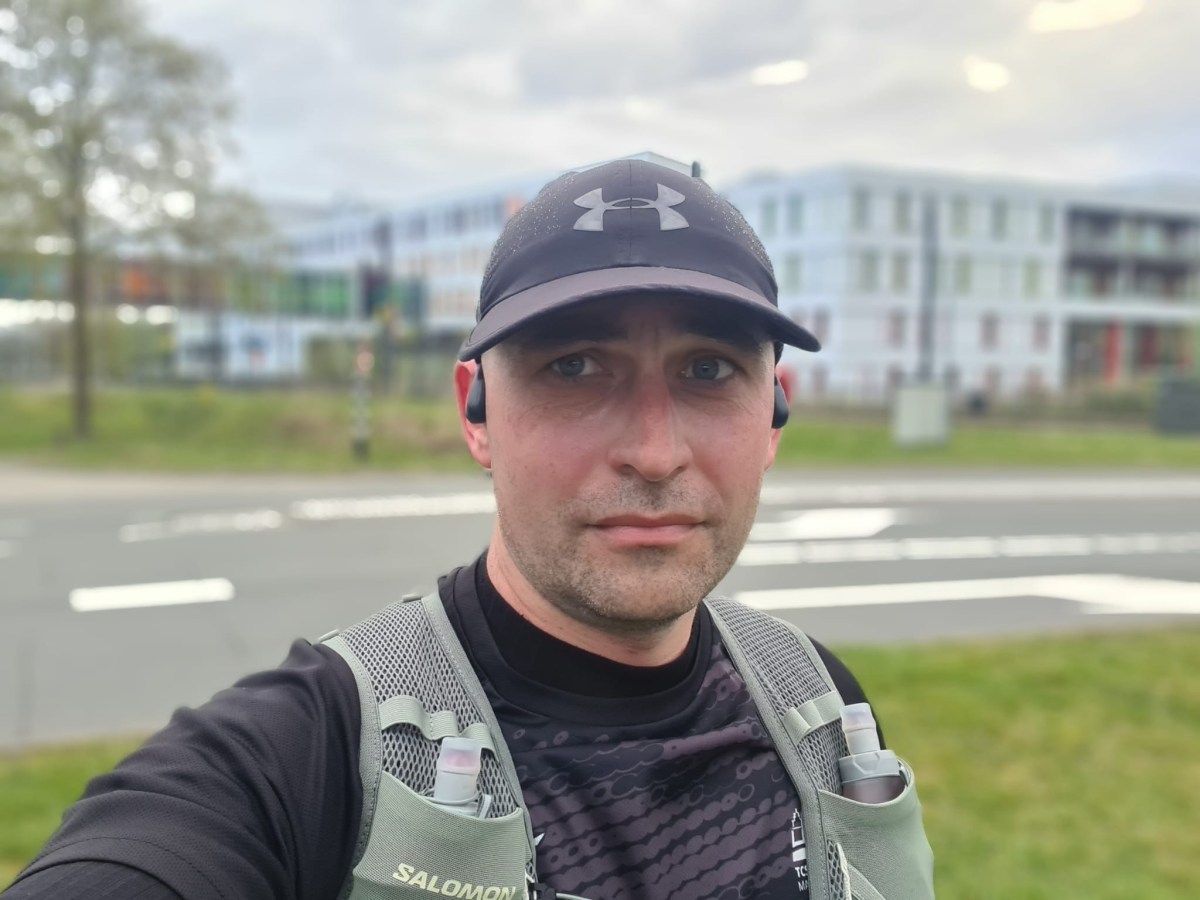
Photo taken after the first interval training — the moment you realize how much work really lies ahead. And the long runs haven’t even started yet.
End of year
2025 comes to an end.
Some people write summaries.
Some make plans.
I take a moment to look back.
What I see makes me happy—and grateful.
Grateful for the moments I was allowed to share this year.
For the support of my family, neighbours, and colleagues.
For every donation and every kind word.
For the anonymous donation that made reaching the 2025 goal possible.
And for a small moment today that says a lot about why this project exists:
an older man at the train station saw me stretching, stopped, and asked if everything was okay — worried I might be injured (Apparently cold air and 3 km can look like real pain.)
Nothing special.
No big story.
Just attention.
Just care for another human.

First run
29 December 2025.
An ordinary afternoon run.
Cold air, but not too cold to breathe.
No people around—everyone busy buying fireworks for New Year’s Eve.
A standard route. The Ka path (a name probably given by some Stephen King fans).
Yet it is somehow special, as it will be tagged as the first run of many more to come.
Five months to prepare for another 42k.
I am not excited. I think about the hard work that will have to be done.
About injuries. About recovery. About all the times my own stupidity kept me out of a race.
Yes, there is a lot of time to think during an ordinary afternoon run.
But running is not about thinking.
It’s about movement.
One run. Then another.
Cold or not. Motivated or not.
And this was just the first.
 Run 4 PMC